
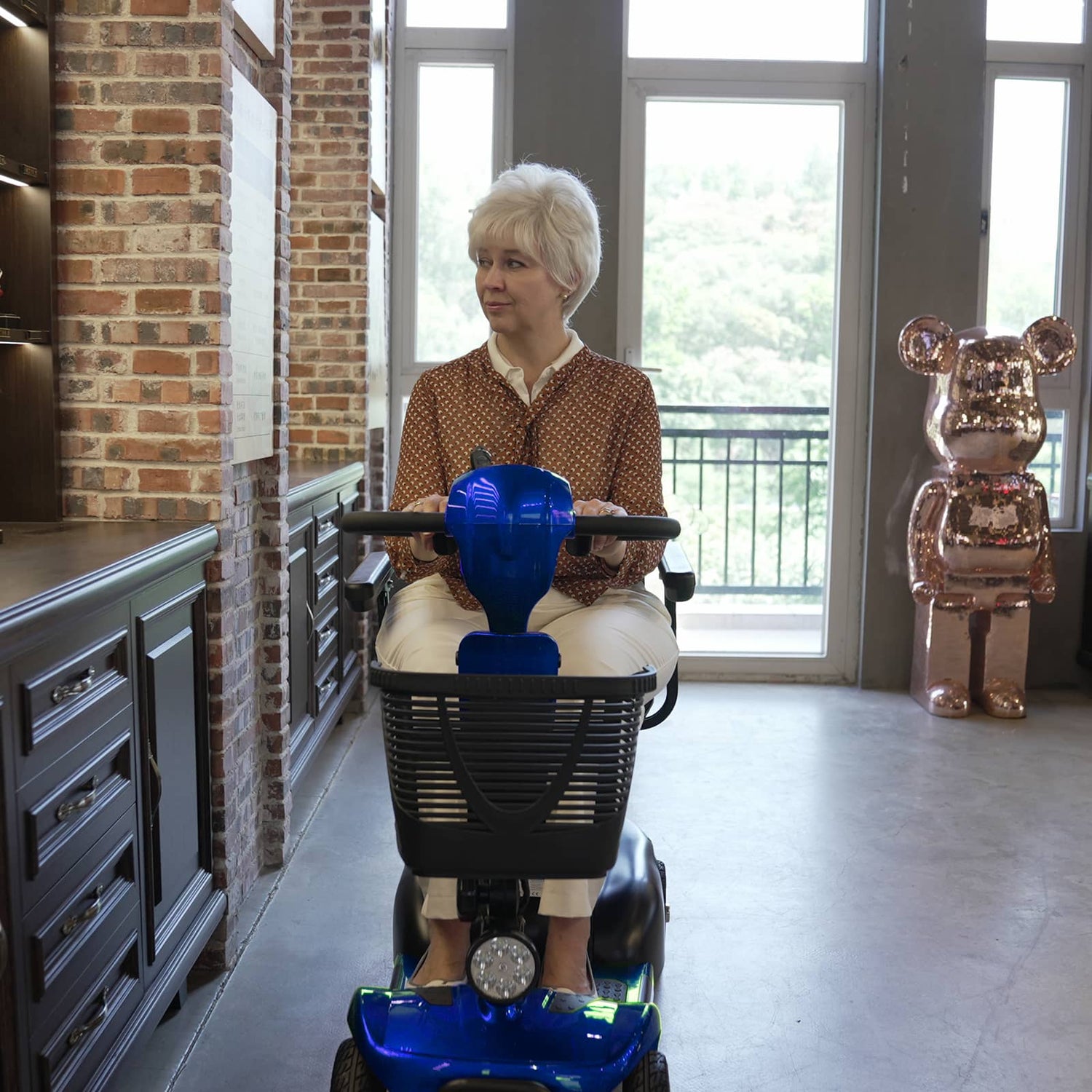
In the world of personal mobility, long-term reliability is the direct result of disciplined maintenance. For Ecomobi users, a scooter is more than just a piece of equipment—it is a vital asset that facilitates independence. However, when a device enters an extended period of inactivity due to seasonal changes or travel, its sophisticated electronic architecture faces significant risks if not stored under professional guidelines.
This article provides a deep dive into the electrochemical and electronic engineering risks of long-term storage and offers industry-standard protocols to protect your investment.
1. Electrochemical Degradation of the Lithium-Ion Battery Pack
The battery pack is the heart of your scooter and its most environmentally sensitive component.
- Parasitic Draw & Deep Discharge: Even when powered off, the Battery Management System (BMS) exerts a tiny "quiescent current" (static power draw) to monitor cell health. If stored with a low charge, this self-discharge can push the voltage below a critical threshold. Once a lithium cell enters "deep discharge," irreversible chemical damage occurs, often leading to a permanent loss of capacity or a "bricked" battery that can no longer accept a charge.
- Voltage Stress: Conversely, storing a battery at 100% charge for months creates unnecessary stress. High voltage promotes electrolyte breakdown and increases internal resistance, shortening the overall lifecycle of the pack.
- Expert Recommendation: The ideal State of Charge (SoC) for long-term storage is between 40% and 60%.
2. Oxidation and Environmental Risks to Control Systems
Your scooter’s "brain"—the motor controller—consists of high-density Printed Circuit Boards (PCBs) and sensitive sensors.
- Micro-Condensation: Fluctuations in storage temperature can cause moisture to condense on internal circuits. As an online-only store, our data shows that many post-storage malfunctions are caused by solder joint corrosion or "trace rot" in damp environments.
- Contact Resistance: Connectors and ports can develop a thin layer of oxidation when left dormant. When the device is eventually powered on, this oxidation creates electrical resistance, leading to system errors, reduced efficiency, or "ghost" malfunctions.
- Expert Recommendation: Store your device in a climate-controlled, indoor environment. Avoid damp basements or uninsulated garages.
3. Mechanical Stagnation and Physical Fatigue
- Lubricant Degradation: The grease inside the hub motor bearings requires periodic movement to remain effective. Long-term inactivity can cause lubricants to settle or dry out, leading to increased friction and potential motor overheating during the first ride back.
- Tire Flat-Spotting: When a scooter sits in one position for months, the weight of the frame exerts constant pressure on a single point of the tire. This leads to "flat-spotting." Coupled with natural rubber oxidation, this deformation can become permanent, causing a bumpy and unstable ride.
4. Ecomobi Official Storage Protocol (SOP)
To maximize the lifespan of your electronic components, Ecomobi recommends the following professional storage protocol:
- Climate Optimization: Store the unit in a dry, indoor space with a temperature range between 60°F and 75°F (15°C - 24°C).
- The Monthly "Wake-Up" Cycle: Even if you don’t plan to ride, perform a monthly maintenance check:
- Verify the battery level is above 40%.
- Power on the unit and engage the motor (no-load) for 3–5 minutes. This redistributes bearing grease and helps clear minor oxidation from electrical contacts.
- Physical Barrier: Use a breathable dust cover. This prevents particulate matter from infiltrating the charging port or settling on sensitive throttle sensors.
Conclusion
Preventative maintenance is always more cost-effective than corrective repair. At Ecomobi, we are committed to providing the expertise necessary to ensure your equipment is as ready for the road as you are.


1 comment
Sharon Pink
Hello I am going to purchase one of your scooters and was wondering do you do VAT exemption. Thank you
Leave a comment
This site is protected by hCaptcha and the hCaptcha Privacy Policy and Terms of Service apply.