
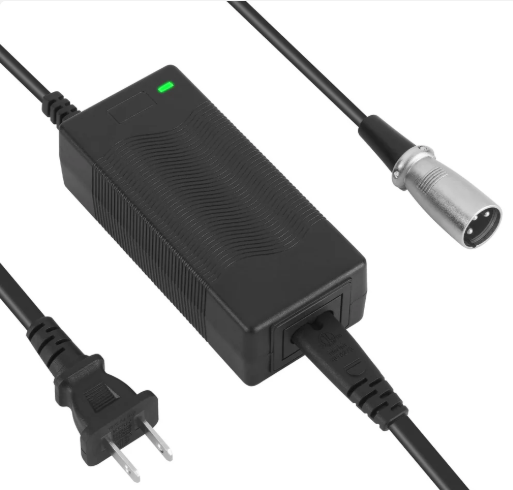
Technical Deep Dive: Why You Must NEVER Use a Lithium Charger for Lead-Acid Batteries
In the world of electric mobility, chargers are often misunderstood as simple "power adapters." As Ecomobi transitions into the lithium era with flagship models like the MS02-PRO and T500, many users attempt to "downwardly compatible" their high-spec lithium chargers with older lead-acid battery vehicles.
From the perspective of electrochemical engineering and circuit design, this is highly dangerous. The Ecomobi R&D Team has identified three core technical conflicts that reveal the potential disasters behind this practice.
1. Fundamental Mismatch in Charging Algorithms
🛵Battery charging is not just a transfer of energy; it is a sophisticated protocol based on specific battery chemistry.
The "Efficiency-First" Logic of Lithium Chargers: CC/CV Protocol Lithium chargers prioritize speed and voltage precision. They use
Constant Current (CC) / Constant Voltage (CV) mode. The logic is straightforward: provide a high constant current to reach the target voltage quickly, maintain that voltage briefly, and then cut off power completely once the current drops to a pre-set threshold.
The "Gentle Restoration" of Lead-Acid Chargers: Multi-Stage Protocol Lead-acid batteries have high internal resistance and slower chemical reactions. They require a much more gradual process, typically involving three or even five stages:
Bulk Charge: High current to reach 80%.
Absorption Stage: Charging at a slightly higher voltage to "force" energy into the deep layers of the plates.
Float Charge Stage: This is a feature lithium chargers completely lack. Because lead-acid batteries have high self-discharge rates, a float charge provides a tiny current to keep the battery topped off and prevent plate corrosion.
Professional Conclusion: Lithium chargers lack the "Float" stage.
Using one on a lead-acid battery results in a state where the battery appears full but is actually chronically undercharged.
2. Electrochemical Risk: Plate Sulfation and Capacity Collapse
🔥If you use a lithium charger on a lead-acid battery long-term, the battery will suffer irreversible damage:
Severe Sulfation: Because lithium chargers shut off too early, lead sulfate cannot fully convert back into active material. This residue hardens into crystals on the plates—a process known as Sulfation.
Drastic Lifespan Reduction: Sulfation causes internal resistance to skyrocket. A lead-acid battery that should last 300 cycles may lose its ability to hold a charge in as few as 30–50 cycles under the "torture" of a lithium charger.
3. Thermal Runaway Risk: Lack of Temperature Compensation
Lead-acid batteries are extremely sensitive to ambient temperature.
⚠️Professional lead-acid chargers feature Temperature Compensation (increasing voltage in cold weather and decreasing it in hot weather).Lithium chargers, however, output a rigid, constant voltage. During hot summer months, the voltage from a lithium charger may be too high for a lead-acid battery. This causes "gassing" (the electrolysis of water into hydrogen and oxygen), leading to water loss, dry-out, overheating, or even melting the battery casing.

4.Ecomobi Safety Protocol
🛡️To protect your property and safety, please strictly follow these Ecomobi Charging Guidelines:
[PROHIBITION] Plug Consistency Does Not Equal Protocol Compatibility: Even if the charging ports (such as XLR or Aviation plugs) look identical, cross-usage is strictly forbidden. A wrong voltage is far more dangerous than a wrong plug.
[IDENTIFICATION] Visual Warnings: We strongly advise users to place clear labels on their chargers, such as "LITHIUM ONLY" or "LEAD-ACID ONLY," especially in households owning both types of vehicles.
[VERIFICATION] Match the Parameters: Before plugging in, always verify that the Output Voltage on the charger's label matches the nominal voltage of the battery pack.
5.FAQ: Common Misconceptions
Q: Lithium chargers have higher power; shouldn't they charge faster? A: Speed comes at the cost of lifespan. Without the "Absorption" stage, this speed is an illusion—the charge is only on the surface and has not truly penetrated the battery plates.
Q: If I accidentally plug it in once, will the battery break? A: A single accidental instance usually won't cause a fire, but it may trigger the BMS or overheat the battery. Unplug immediately and check for unusual smells or excessive heat.



Leave a comment
This site is protected by hCaptcha and the hCaptcha Privacy Policy and Terms of Service apply.