
The Engineering Behind "Hands-Off" Safety
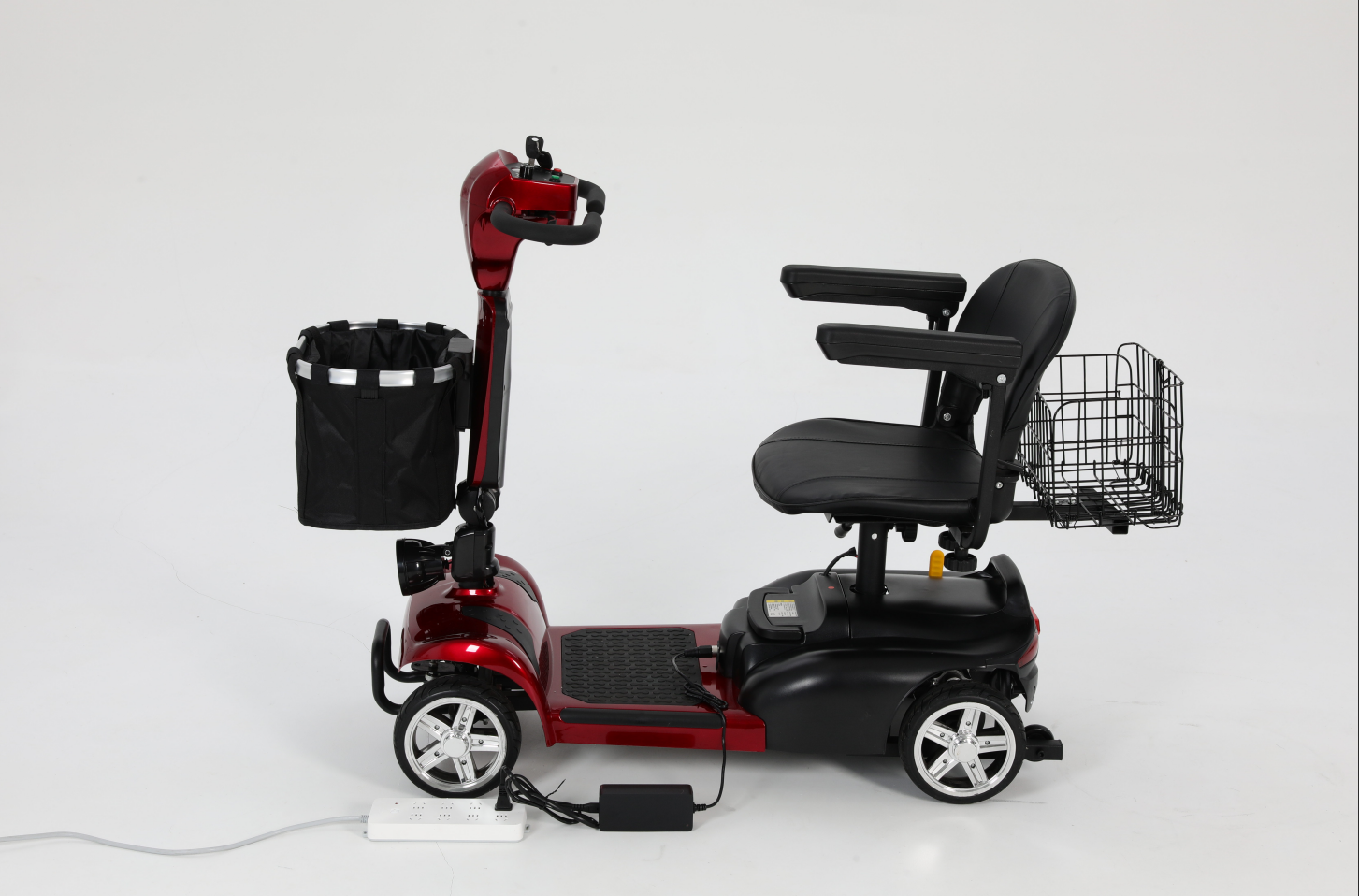
If you are transitioning from a bicycle or a manual wheelchair, your first instinct is likely to look for a handbrake lever on the handlebars. On an ECOMOBI scooter, you will notice it is missing.
This isn't an oversight—it is a purposeful engineering decision. ECOMOBI utilizes a Intelligent Electromagnetic Braking (EMB) system. Unlike bicycles designed for sport, our scooters are engineered for intuitive, fail-safe mobility.
Here is a deep dive into the four reasons why electromagnetic braking is the gold standard for modern mobility.
1. The "Fail-Safe" Logic: From Active to Passive Safety
Traditional bicycle brakes are Active: You must have the grip strength and reaction time to pull a lever to stop.
The Risk: For users managing arthritis, limited dexterity, or sudden panic, the physical requirement to "squeeze" can be a safety barrier.
ECOMOBI uses Passive/Fail-Safe Logic:
How it Works: The default state of the scooter is "Locked." Electricity is required to disengage the brake.
The Safety Benefit: The moment you release the throttle, the electrical current ceases, and heavy-duty mechanical springs instantly engage the brake pads. This transforms the stopping decision from a muscular effort into a simple instinctive release, drastically reducing human error.
2. Hill-Hold Technology: Eliminating Roll-Back Anxiety
Starting on an incline with a manual handbrake is stressful—there is often a dangerous moment of rolling backward before the motor catches.
Because the springs are always "ready," the scooter remains locked in place on a slope the millisecond you stop. Whether you are pausing on a steep driveway or a ramp, you will never experience the "roll-back" common in manual vehicles.
3. Regenerative Braking: Protecting Your Balance
Squeezing a manual brake too hard can lead to "locking up" the wheels, causing a jarring jolt that can throw a rider off balance. ECOMOBI utilizes a sophisticated two-stage deceleration process:
Regenerative Braking: As you let go of the lever, the motor becomes a generator, using magnetic resistance to slow the scooter down smoothly.
Mechanical Lock: Only when the speed reaches near-zero does the electromagnetic lock engage with a reassuring "click."
This two-stage buffer ensures a stop that is quick but fluid, protecting your spine and neck from the "jerking" sensation of a sudden stop.
4. Absolute Immobility in Emergencies
What happens if your battery dies or someone tries to push your scooter while it’s parked?
Bicycles: Without a handbrake engaged, they can roll away or be stolen easily.
ECOMOBI: Because the system is "Normally Closed," the wheels are physically locked whenever the power is off. Unless you manually toggle the Freewheel Lever, the scooter is immovable. This serves as both a primary safety feature and a secondary anti-theft deterrent.
Pro Guide: How to Brake Safely in Every Scenario
While the system is automated, mastering these professional driving techniques will ensure the smoothest ride possible.
1. Anticipatory Deceleration (The Golden Rule)
The Move: Do not wait until the last second to release the throttle. Scan the path 10 feet ahead and slowly guide the lever back to the neutral position.
The Logic: This allows the motor maximum time for regenerative braking, resulting in the most comfortable, "whisper-smooth" stop.
2. Managing Long Declines
The Common Mistake: "Stop-and-Go" braking by releasing the lever fully over and over.
The Move: Hold the throttle in a half-pushed position to maintain a steady, controlled descent using electronic resistance.
The Logic: The system is designed to govern your speed automatically. If the hill is too steep, the EMB system will intervene if it detects over-speeding.
3. Emergency Stopping
The Move: If an obstacle appears suddenly, immediately let go of the controls completely.
The Logic: ECOMOBI is programmed for "release-to-stop." Letting go is the fastest way to trigger the full mechanical braking force in a split second.
4. Wet or Loose Surfaces (Rain/Gravel)
The Move: Ease the lever back very slowly, allowing for 1.5x the normal stopping distance.
The Logic: While the motor will lock, physics still applies—tires can slide on slick surfaces if the stop is too abrupt. A gradual release prevents skidding.
5. The "Click" Confirmation
The Move: Wait until the vehicle is at a complete standstill and you hear the audible "click" of the brake engaging before turning off the power key.
The Logic: This ensures the mechanical lock is fully seated, preventing any minor "creeping" after the power is cut.

Leave a comment
This site is protected by hCaptcha and the hCaptcha Privacy Policy and Terms of Service apply.